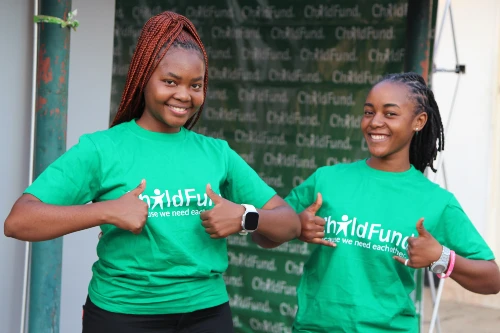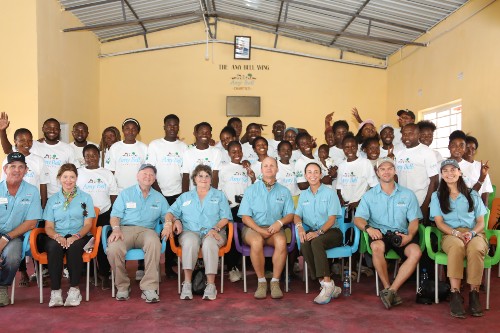
ChildFund has officially handed over the newly expanded Chainda Youth Resource Centre in Chongwe District, marking a major milestone in...

While access to basic education is officially free in Zambia, many children still encounter significant barriers to learning. Transition rates from early childhood education to primary school remain a concern, with only 53.5% of children leaping as of 2024.
Recent reports indicate some improvements, but transition rates remain uneven across different provinces. For example, while areas like Lusaka Province report transition rates as high as 90%, rural provinces such as Western and Luapula continue to struggle, with transition rates hovering around 40%. This disparity highlights the persistent barriers that prevent many children from continuing their education despite government policies promoting Free Primary Education and targeted enrollment initiatives.
Economic hardship remains a significant factor influencing transition rates. Many families cannot meet the indirect costs of schooling, such as uniforms, transportation, stationery, and examination fees, despite free tuition.
To address these challenges, our education program focuses on expanding access to quality, inclusive learning environments, ensuring that every child, regardless of their background, can transition smoothly through the education system, free from violence, discrimination, and ha
Facts and figures from 2024 data.
ChildFund’s education programs take a holistic approach to supporting children’s academic and social-emotional development and their physical and emotional safety. We bring teachers, parents and caregivers together to learn how children’s protection and education are interlinked and form common expectations for their children’s academic learning and supportive school communities.
Academic and cognitive functions and emotional and social functions are interrelated: Children cannot learn when their physical or emotional well-being is compromised. But high rates of inequality, violence in and around schools, teacher shortages and lack of parental engagement pose barriers to children’s education.
Using evidence-based principles, we support parents to engage more deeply with their children’s academics, navigate the education system, and practice positive parenting (i.e., refraining from corporal punishment and increasing child supervision). We also train teachers on child-centered teaching approaches and alternatives to corporal punishment, and leverage technology to complement training, reinforce classroom instruction and reach children during crises like natural disasters and conflict.
Children learn best when they feel safe, supported, and connected. That’s why we launched the Education for Protection and Wellbeing, giving children the tools they need to succeed, inside and outside the classroom.
Delivered in partnership with the Ministry of Education through schools, EPW targets teachers, caregivers and children (6 - 12 years) to cultivate physically, emotionally and psychologically healthy environments for children’s well-being and education. The program combines cognitive-behavioral skills training for teachers and caregivers and social-emotional learning and self-protection activities for children. Learn more.
Collaboration with local partners and the Ministry of Education and partners like the Transearch Foundation to construct, renovate classroom blocks to increase access to enhanced child-friendly learning places.
Learn More:
Many schools do not include children in decisions that affect their education and daily lives. This leaves young learners without a say in important matters. ChildFund is addressing this by supporting the creation of Children’s Councils. These councils give students a formal platform to participate in school governance and have their concerns heard. By involving children in decision-making, ChildFund helps promote their rights and prepares them to be active, responsible leaders in their communities.
In collaboration with the Ministry of Education, we implement the Active Teaching and Learning Approach in schools and teacher training institutions. This initiative is designed to enhance the capacity of both in-service and pre-service teachers by equipping them with child-centred teaching methodologies that foster social-emotional learning.
Our goal is to create a dynamic and engaging educational environment where teachers are empowered to support the holistic development of their students. By focusing on social-emotional learning, we aim to nurture well-rounded individuals who are not only academically proficient but also emotionally resilient and socially aware. Learn more.
Girls, just like boys, have a right to education. We ensure that girls not only get into school but also stay in school, supporting their learning and life skills. We promote an equitable community and school environment that encourages learning for both girls and boys. Additionally, we address harmful cultural practices that marginalize girls, ensuring that every child has access to quality education
In partnership with the Ministry of Education and other stakeholders like the Literacy Association of Zambia, ChildFund is supporting the establishment and management of literacy clubs in primary schools. These clubs are equipped with engaging reading materials to help strengthen children’s literacy skills. Our goal is to nurture a love for reading and improve literacy levels among young learners. Learn more.
At Katete Primary School in Chibombo District, girls were missing up to 45 days of school each year due to inadequate sanitation facilities, especially during their menstrual periods. This not only disrupted their learning but contributed to a staggering 45% dropout rate among girls.
To change this, ChildFund, through the generous support of the Transearch Foundation, has constructed modern girls’ washrooms, installed a water reticulation system benefiting 13 surrounding villages, and provided 400 desks to learners. Additional classroom blocks and teachers’ houses have also been built, reducing the pupil-teacher ratio from 1:80 to 1:45.
In Mumbwa and Luangwa, girls that used to walk distances of up to 24 kilometers to get to school are now safe as ChildFund has constructed boarding facilities with a 64-bed space capacity and equipped them with solar power and the necessary furniture. These investments are helping more girls stay in school, learn with dignity, and dream bigger.

ChildFund has officially handed over the newly expanded Chainda Youth Resource Centre in Chongwe District, marking a major milestone in...


ChildFund has called for strengthened collective action to address the persistent challenges facing girls in Zambia, urging communities, government, and...
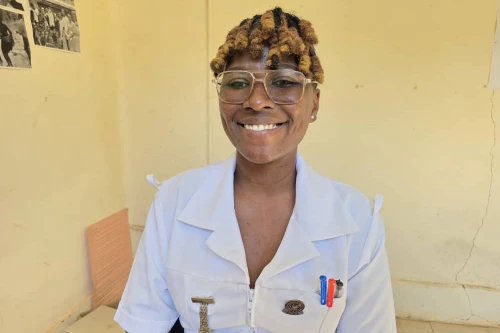
Kabwe grew up in Kafue District with her parents, twin sister and three other siblings. But life was not always...