


Solar lights are transforming study time in Mumbwa, Shibuyunji, Luwangwa, and Nyimba districts
February 20, 2026
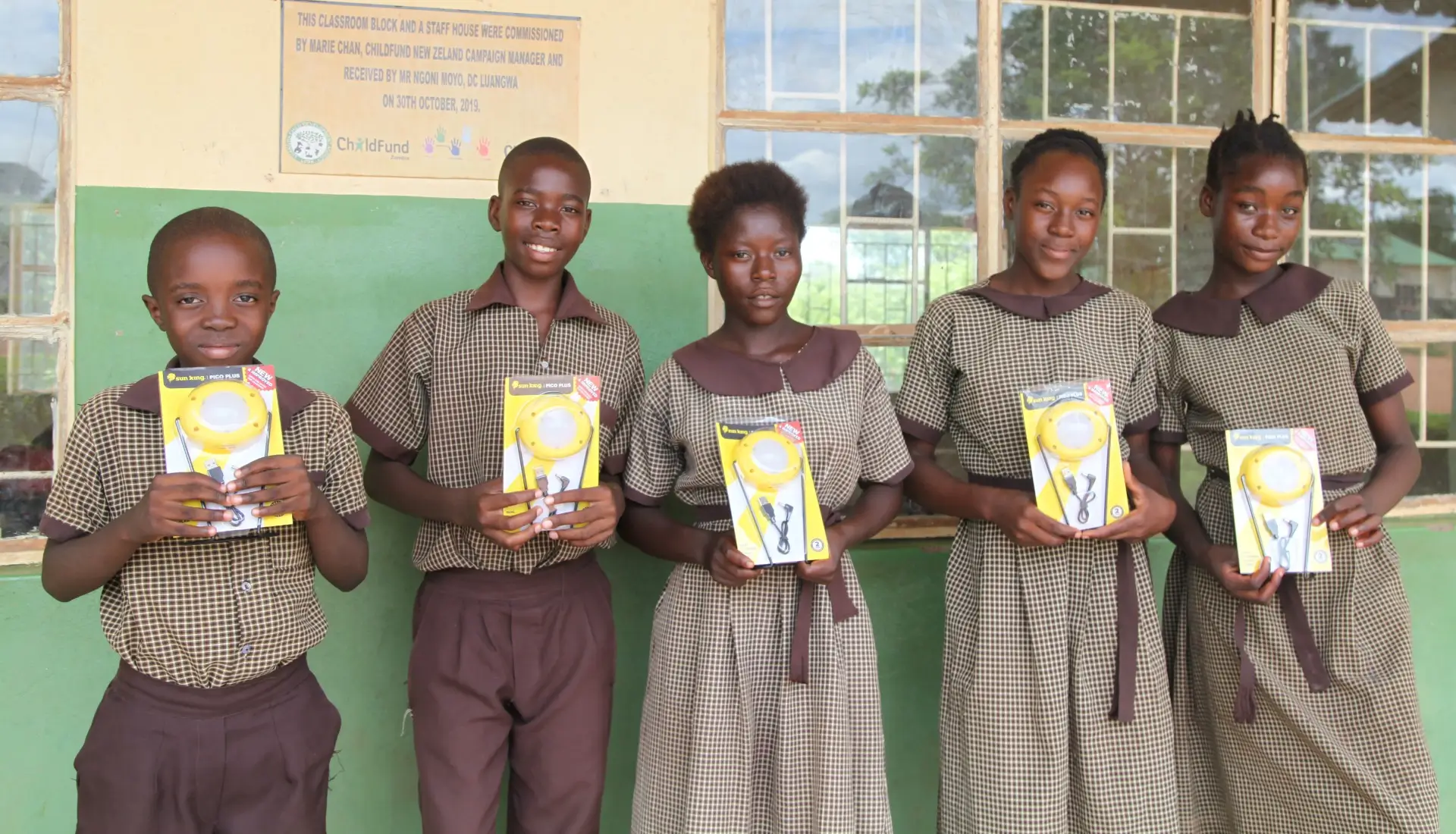
Solar lights
In many rural communities across Zambia, the setting sun often signals the end of a child’s ability to learn.
For upper primary learners, limited access to electricity has long meant restricted study time, reduced concentration, and fewer opportunities to perform well in school. But today, that story is beginning to change.
In a typical rural household, one of the most familiar items after dark is a makeshift lamp locally known as a “Koloboi.”
Usually fashioned from a small tin or bottle filled with kerosene and a cloth wick, the Koloboi produces a weak, flickering flame; barely enough to light a page. Its smoke stings the eyes, fills the air with a choking smell, and leaves walls blackened with soot.
For years, this crude lamp has been the only source of light for cooking, household chores, and most importantly, for children trying to do their homework or read their schoolbooks at night.
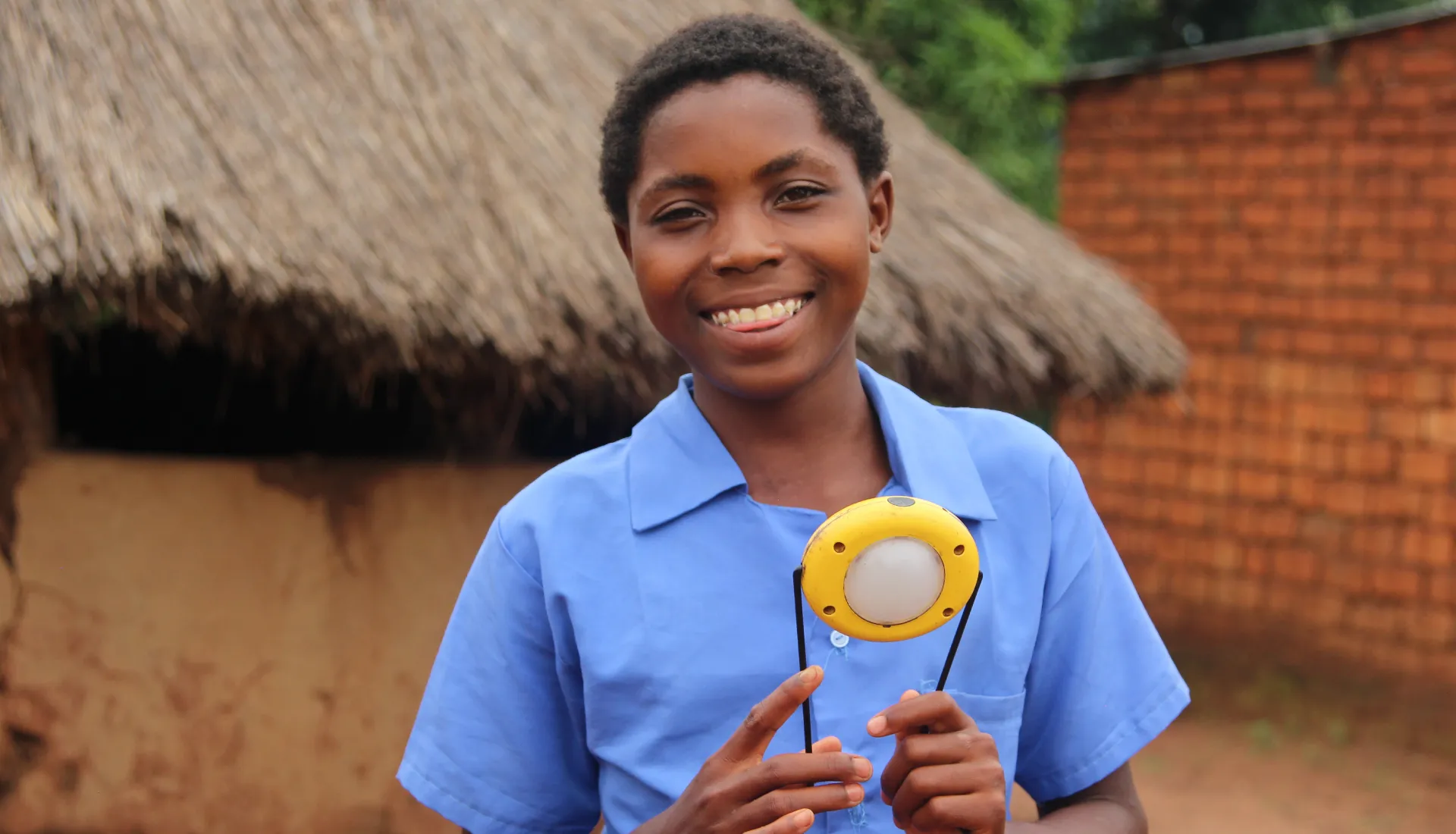
For 12-year-old Fainess and her friends Doris and Elizabeth from Nyimba District, this was their daily reality.
“It was very difficult to read for a long time using a Koloboi,” Fainess explains. “Our eyes would burn from the smoke, and when the wind blew, the light would go off.”
Everything changed when ChildFund joined hands with the Econic Earth Foundation to bring clean, renewable energy solutions to vulnerable children living in remote Game Management Areas (GMAs) of Zambia. These regions face severe environmental challenges that continue to affect children’s access to education, health, and safety. A total of 2,382 were distributed to learners in examination classes across Luangwa, Shibuyinji and Mumbwa Districts.
With access to clean, reliable lighting, learners can now study comfortably in the evenings; strengthening their literacy and numeracy skills and preparing with greater confidence for their exams.
“The solar light does not produce smoke. I’m now able to study at night for a long time,” says Fainess.
The impact goes beyond academics.
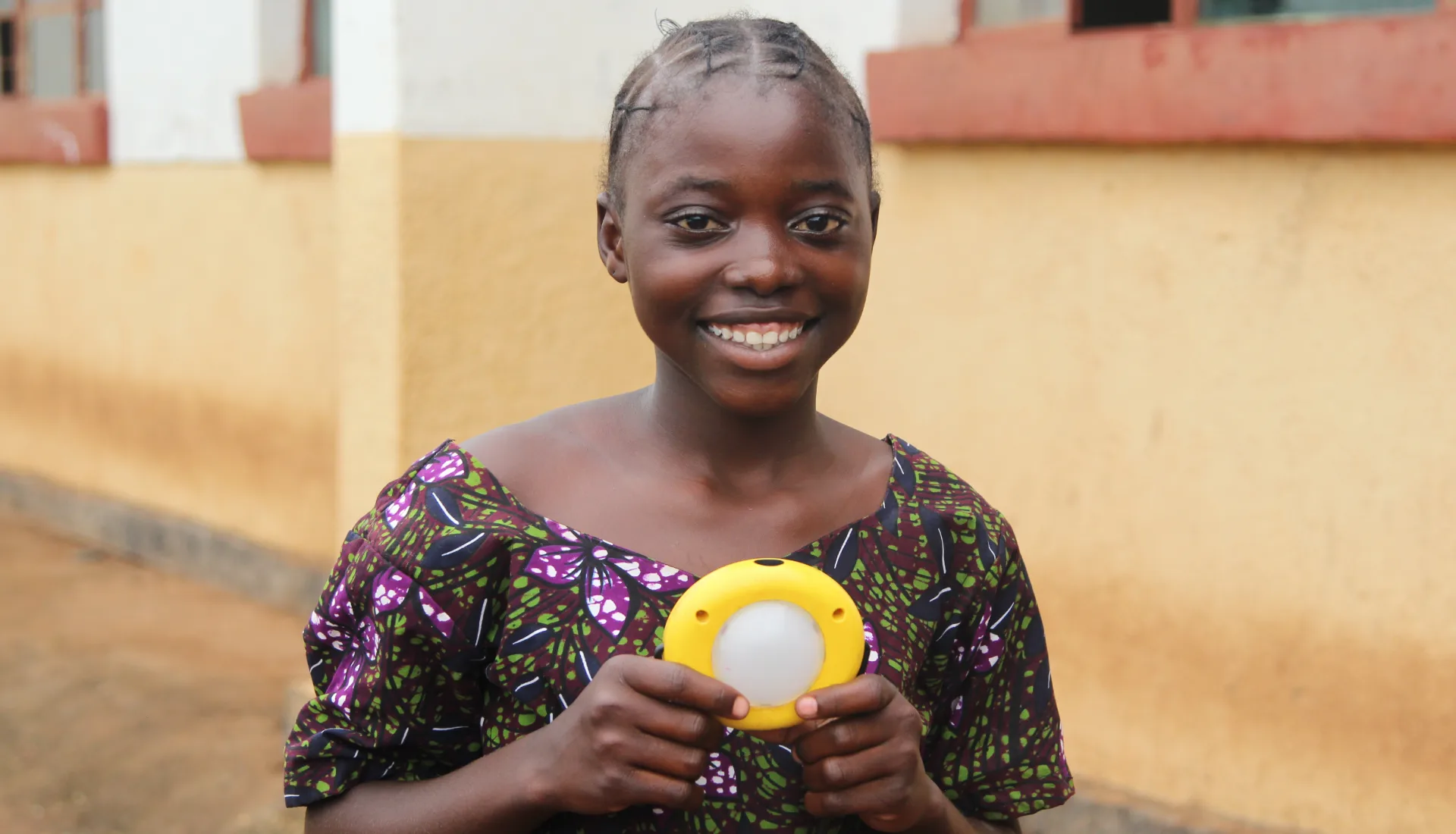
“I’m no longer scared to go outside at night,” Elizabeth shares. “Our toilets are outside the house, and before, the Koloboi would blow off with the wind. We were afraid of snakes. Now, the solar light helps us feel safe.”
Safety is now restored.
“Every child deserves the chance to learn safely, without fear or limitation,” says Victor Koyi. “By providing solar lights, we are not just brightening homes; we are illuminating futures, empowering learners to reach their full potential.”
Receiving the solar lights on behalf of Luangwa, District Commissioner, Luke Chikani had this to say: “In a setting like Luangwa , which lies within a game management area and wildlife corridor, access to solar lighting goes far beyond education,”. “These lights are improving safety for families who must navigate the night alongside wildlife, reducing health risks from kerosene smoke, lowering household costs, and protecting the environment. Most importantly, they are bringing dignity and peace of mind, especially for children and women, by making homes and surroundings safer after dark.”
What may seem like a simple intervention is transforming daily life for children. Solar lighting is improving visibility, enhancing safety, protecting health, and enabling children to have more learning hours.
The WattsOn Project builds on ChildFund’s broader education initiatives across the country.


Related Resources
Clean water helps children in Muchimazi stay healthy and spend more time learning
In Muchimazi, Nyimba District, access to safe water is helping children stay healthy, spend more...
MAP, ChildFund donate USD 1M micronutrient supplements to improve maternal and child nutrition
ChildFund International and MAP International have donated more than 129,000 bottles of Multiple Micronutrient Supplements...
ChildFund advisory board visits Luangwa to review program impact
ChildFund’s Advisory Board embarked on its first visit to Luangwa District since being elected, marking...